
Home  Garnet
Garnet
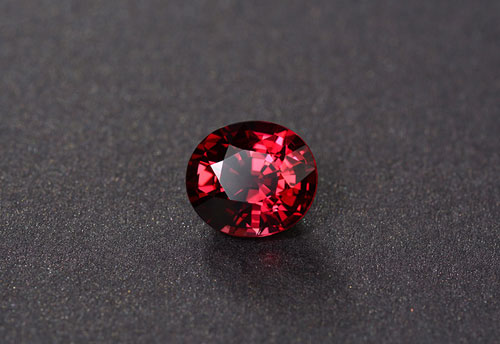 Garnet, the birthstone for January, received its nomenclature from the Latin plagiaristic word granatus, which explains - like a grain, which dates to the form of incidence wherein crystals look a lot more like grains or seeds implanted in the matrix. Garnet is a kin of minerals possessing analogous corporeal and crystalline properties.
There are a number of trades and array of names offered to refer for garnet, most of these nomenclatures are for meticulous colors of a species. Hessonite is the assortment name for a superior orange, cinnamon brown or pinkish range of grossularite, while tsavorite is the commercial name given for the superior dark green grossularite. Melanite is a black titanium demeanor variant of andradite and demantoid is a wealthy green type. Malaya is a commercial name for a pyrope-spessartite that ranges in color from red, through varying shades of orange and brownish orange to peach and pink.
Uses of Garnets :
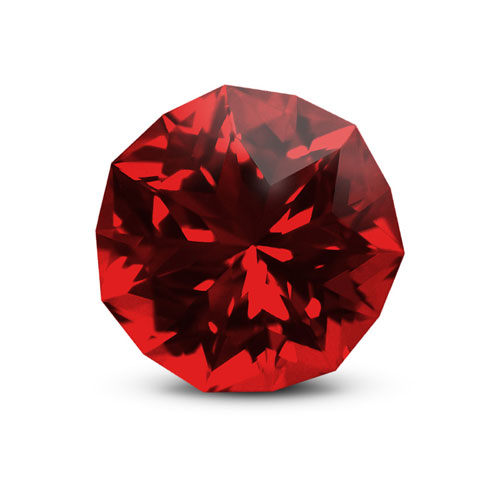
Pure crystals of garnet are used as gemstones. Garnet sand is a good abrasive, and a common replacement for silica sand in sand blasting. Mixed with very high pressure water, garnet is used to cut steel and other materials in water jets. Garnet sand is also used for water filtration media.
* In USA it is known as the birthstone for January.
* It is the gemstone for the 2nd wedding anniversary.
* It is the state mineral of Connecticut.
* It is also New York's gemstone.
Geological importance of Garnet :
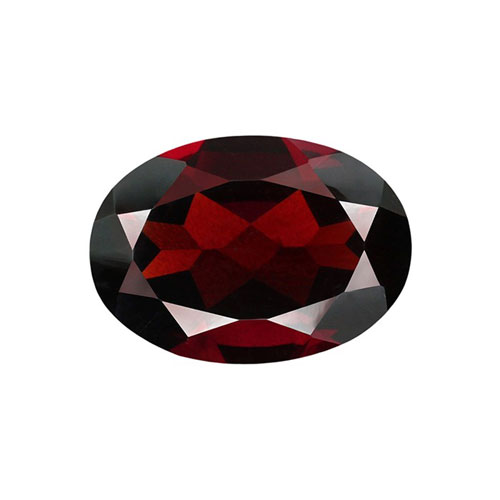
Garnet is a mineral of great importance to geology due to its hardness, crystal structure and ability to form in a variety of environments. It is an abundant mineral and has many industrial uses. Garnet can be found in igneous, sedimentary and metamorphic rocks. It is often used as an index mineral for metamorphic grade, due to its wide range of compositions and stability under high temperatures and pressures. Garnet also plays a role in the study of geodynamic processes such as continental collision and subduction. It can be used to help determine the amount of pressure and temperature experienced by a rock during metamorphism. Finally, Garnet is an important constituent of many ore deposits, being mined as an ore of iron, manganese, aluminum and chromium.